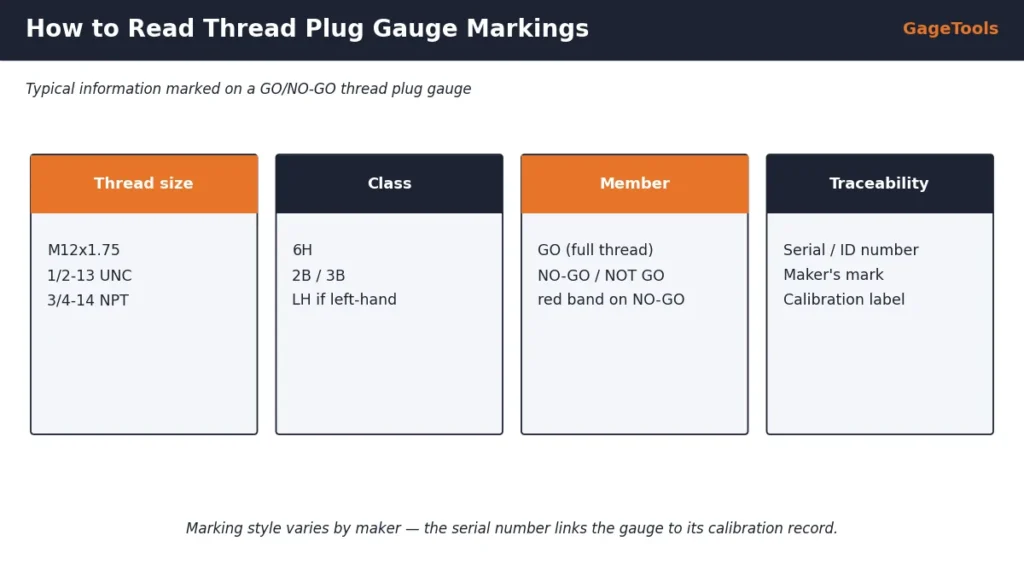
How to Read Thread Plug Gauge Markings (GO, NO-GO, Class and Serial Number)
What do the markings on a thread plug gauge mean? Learn how size, pitch, class, GO/NO-GO, LH and serial numbers appear, with examples for metric and UN.

What do the markings on a thread plug gauge mean? Learn how size, pitch, class, GO/NO-GO, LH and serial numbers appear, with examples for metric and UN.
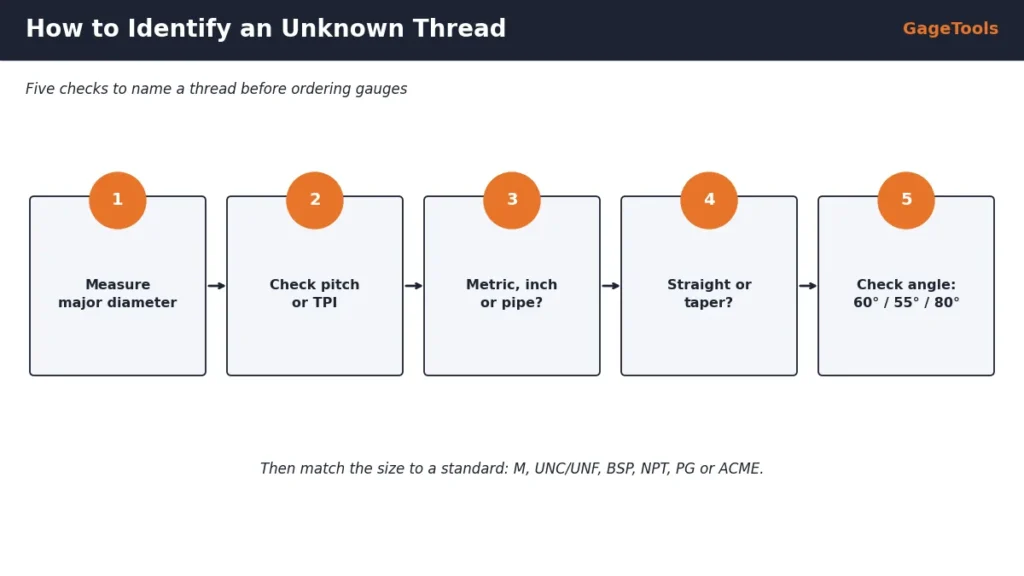
Identify any thread in five checks: diameter, pitch, metric or inch, straight or taper, and thread angle. Then order the right GO/NO-GO thread gauge.
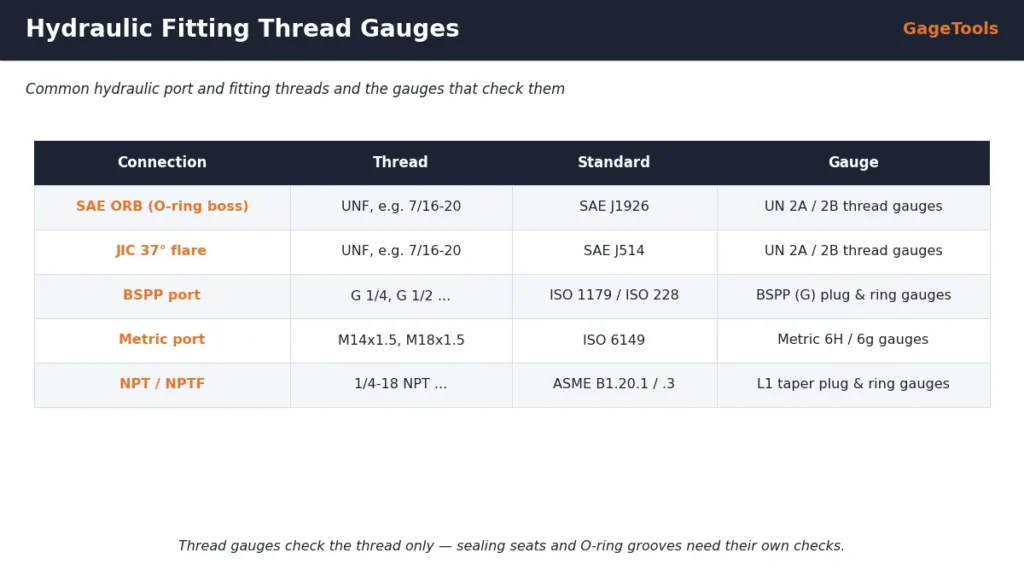
Which thread gauges check hydraulic ports and fittings? See SAE ORB, JIC, BSPP, metric ISO 6149 and NPT threads and the plug and ring gauges they need.
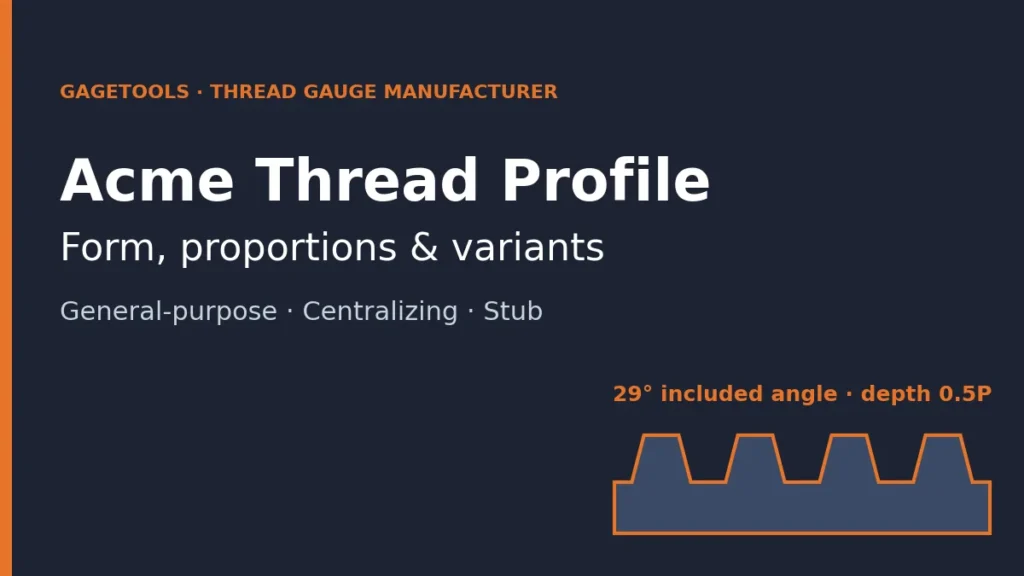
The Acme thread profile explained: 29° included angle, flat crests and roots, general-purpose, centralizing and Stub Acme, and how the form affects gauging.

When standard gauges don’t fit your part: custom thread gauges, design inputs, drawing review, sample approval, documentation and lead time.

Gage inspection has two meanings: checking parts with GO/NO-GO gages, and inspecting the gages themselves on arrival, at calibration and for wear.
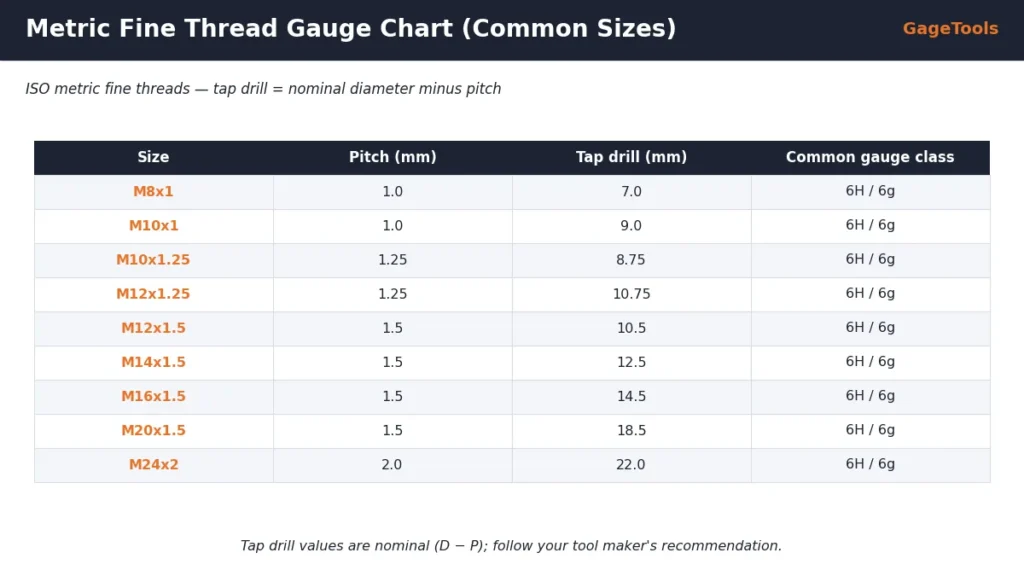
Metric fine thread chart for M8x1 to M24x2 with pitch and tap drill sizes, plus how to order GO/NO-GO plug and ring gauges for fine-pitch threads.
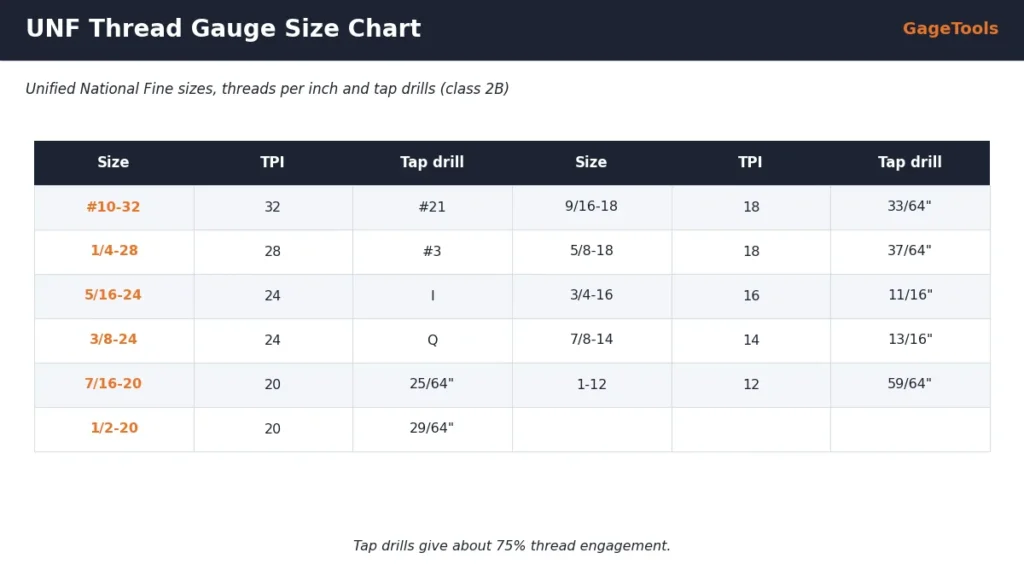
UNF thread chart from #10-32 to 1-12 with threads per inch and tap drill sizes, plus where fine inch threads are used and how to order UNF gauges.
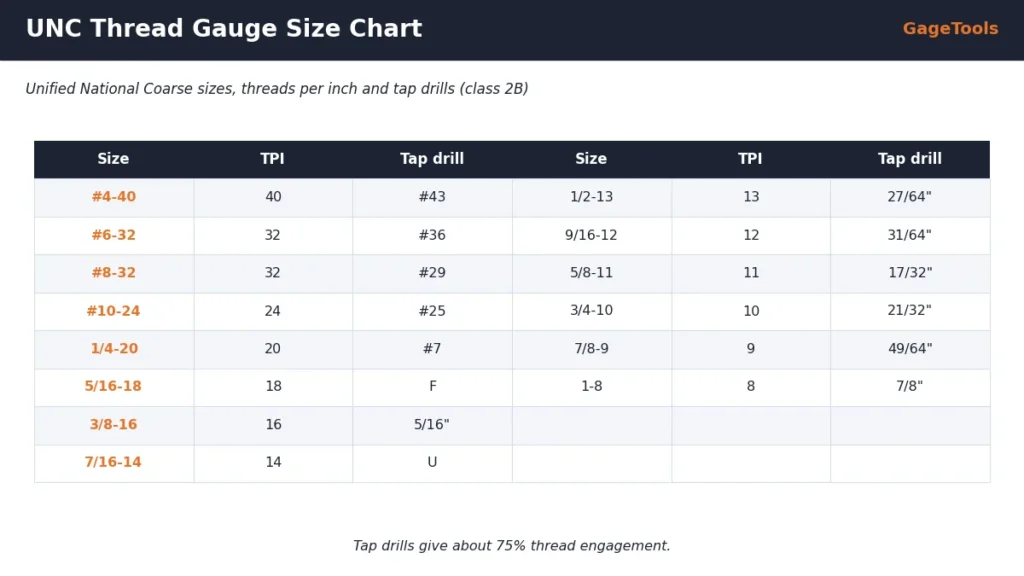
UNC thread chart from #4-40 to 1-8 with threads per inch and tap drill sizes, plus how to choose 2B/3B plug gauges and 2A/3A ring gauges.
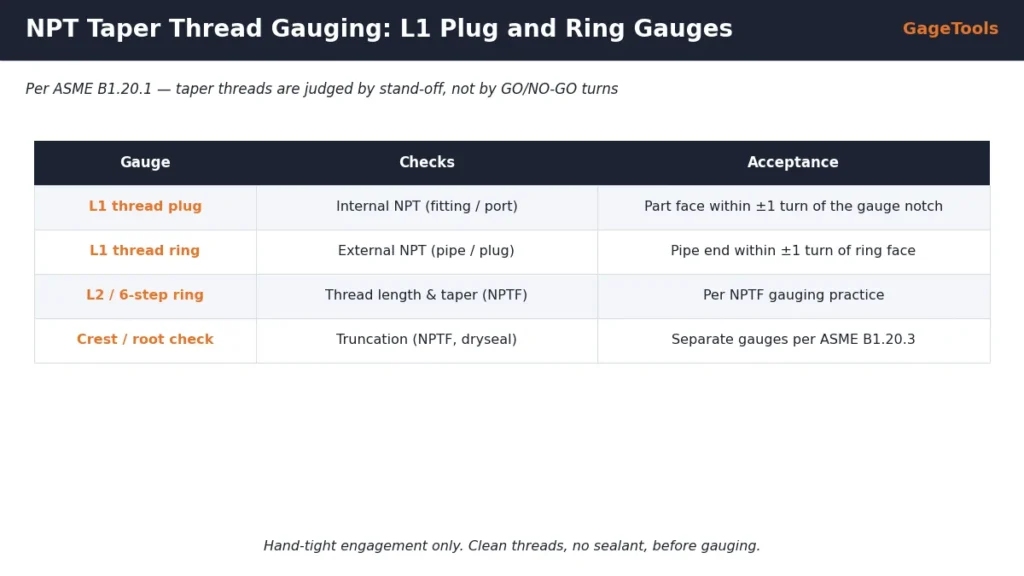
NPT taper threads are checked by stand-off with L1 plug and ring gauges, not GO/NO-GO turns. Learn the ±1 turn rule, NPTF gauging and what to order.