Need gauges for this? GageTools manufactures GO/NO-GO thread plug gauges and thread ring gauges in Dongguan, China. Standard sizes ship from stock within 72 hours, MOQ is 1 piece, and every RFQ gets a reply within 24 hours — request a quote.
Do You Need to Buy Setting Plugs with Thread Ring Gauges?
It depends on the ring design and your inspection arrangements. Adjustable thread ring gauges use appropriate setting plugs as part of their setting and verification process. You may not need to own those plugs if a qualified service provider performs that work. Confirm the required method, supplied components and future calibration arrangements before ordering.
This guide concerns straight-thread ring gauges. Taper pipe gauges and other specialized systems require their own applicable procedures.
1. Distinguish a Working Ring from a Setting Plug
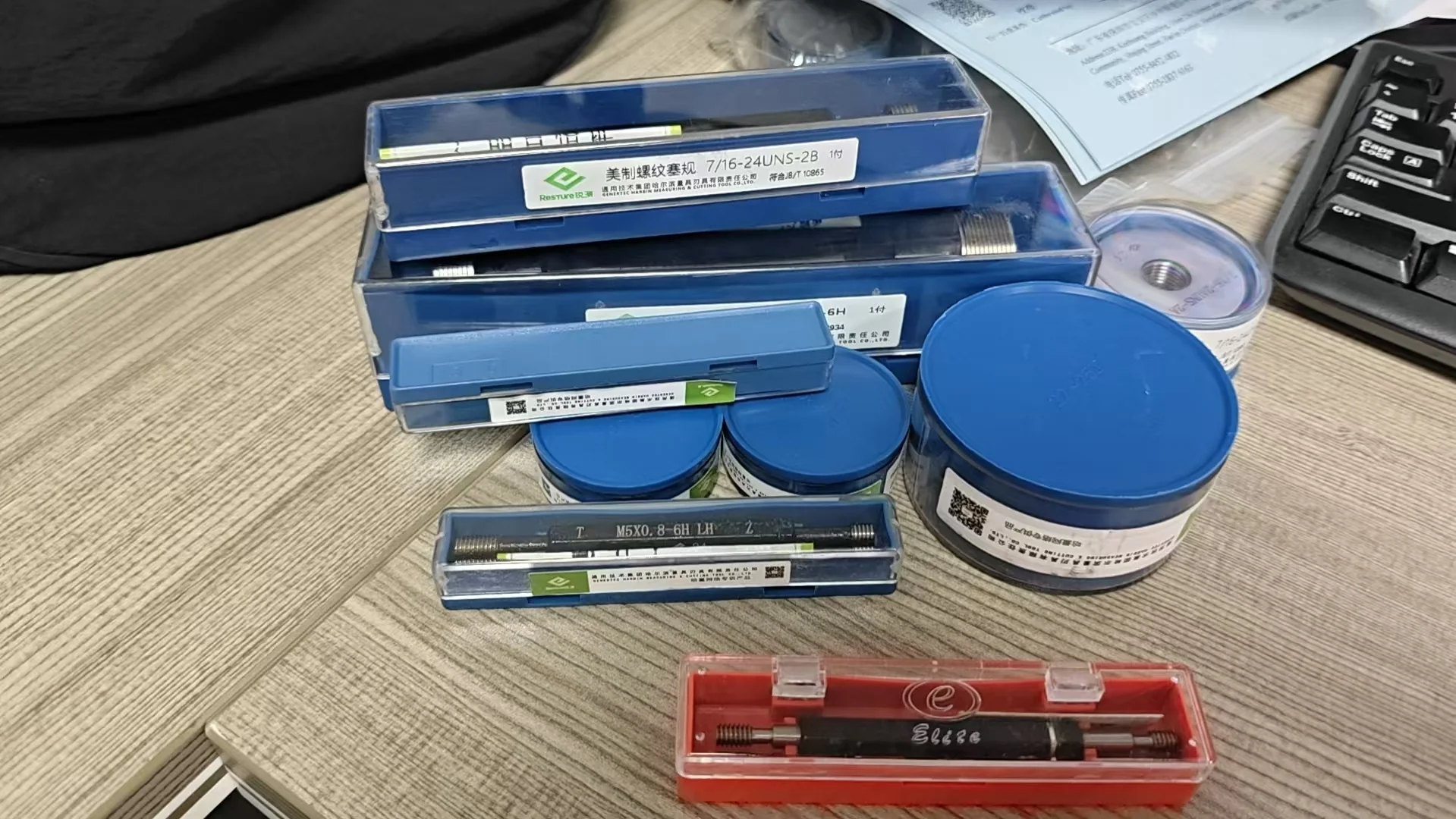
A working thread ring gauge checks an external product thread. A setting plug serves a different purpose: it supports the setting and verification of the corresponding adjustable ring.
An ordinary working plug gauge used to inspect an internal product thread is not a substitute for the required setting plug. Describe the intended function explicitly when requesting a quotation.
Vermont Gage distinguishes these roles in its thread ring and setting plug product guidance.
2. Confirm Whether the Ring Is Solid or Adjustable
Do not assume every thread ring gauge has the same construction. Ask the supplier to identify the proposed design and the applicable inspection and calibration method.
A solid ring is not adjusted using the mechanism of an adjustable ring. Its verification arrangements must still be defined, but the accessories and procedures should not be copied from an adjustable-ring order without technical review.
For a replacement purchase, provide the existing ring identification and specification rather than relying on its nominal size alone.
3. Decide Who Will Perform Setting and Verification
If your laboratory will maintain adjustable rings, ask it to define the required setting plugs, records and procedures before placing the order.
If you outsource this work, ask the service provider whether it has the necessary equipment for your exact requirements and whether it needs any buyer-supplied masters. Resolve this before buying accessories that may be unnecessary or incomplete.
| Your Situation | What to Confirm | Purchasing Action |
|---|---|---|
| Buying adjustable rings for the first time | Who will set, verify and maintain them? | Agree on the complete support arrangement |
| Using an internal laboratory | Which setting plugs and records does it require? | Include the approved items separately in the quotation |
| Using an external laboratory | Can it service the exact ring specification? | Confirm capability and any required supplied masters |
| Replacing one ring | Is the existing setting plug suitable and in verified condition? | Request compatibility review before ordering |
| Buying solid rings | What verification method applies? | Specify that method and its document requirements |
4. Do Not Assume Matching Nominal Sizes Establish Compatibility
Provide the complete designation, applicable standard, gauge function and identification for any existing setting plug you intend to reuse. Include its relevant calibration records.
Vermont Gage notes that manufacturing variations can affect the feel between a ring and setting plug, even when both meet their specifications. Its adjustable-ring setting guidance also calls for a setting plug of known condition and appropriate dimensions.
Have the responsible laboratory review compatibility. Hand feel alone should not determine whether a proposed replacement is acceptable.
5. Request an Itemized Gauge Quotation
List GO and NO-GO working rings separately where both are required. Identify any setting plugs, handles, cases and documentation as additional line items rather than assuming that “complete set” includes them.
Ask whether the rings are supplied ready for use under the agreed specification and what verification records accompany them. Also identify which setting or reference information your quality team requires.
Illustrative example: one quotation covers working rings and their reports. Another includes working rings, setting plugs and separate records for each item. Comparing only the total price would obscure the different supply scopes.
6. Plan for Future Recalibration
Before approval, establish who will service the gauges and how the tools will be identified in the records. Ask what must be sent with the rings and how unavailable or unsuitable setting equipment would affect the service.
Follow your quality system when establishing review intervals. Purchasing a setting plug does not, by itself, establish a complete calibration process or eliminate the need to monitor its condition.
Buyer Questions
Can I use a production bolt to set an adjustable ring?
A production bolt is not a substitute for the specified setting equipment. Use the approved setting and verification method.
Are setting plugs always included with ring gauges?
No. Confirm the quotation line items. Working rings, setting plugs and their documents may be supplied separately.
Can one setting plug serve both GO and NO-GO rings?
Do not assume so. Confirm the required members and configuration with the manufacturer or laboratory for the applicable gauge system.
Do I need to buy setting plugs if calibration is outsourced?
Possibly not. Confirm that the service provider can support the exact rings and whether it requires you to supply any associated equipment.
Request a Thread Ring Gauge and Accessory Review
Contact GageTools in Dongguan, Guangdong, China, with your thread specification and intended maintenance arrangement. Include existing setting-plug details if compatibility needs review. Confirm the proposed configuration and availability before ordering.
For general quotation details, see our custom thread gauge RFQ checklist.
Email: [email protected]
More Specification Points to Confirm
- Why Thread Ring Gauges Cannot Be Calibrated Like Plug Gauges: Internal pitch diameters on thread ring gauges cannot be measured accurately using standard calipers or micrometers due to thread helix angle and internal geometry limits.
- Always Use Truncated Setting Plugs for Flank Alignment: When setting an adjustable ring gauge, buyers must specify a Truncated Setting Plug rather than a standard working thread plug.
- Follow Standard Drag Procedures During Ring Adjustment: To set an adjustable ring gauge, loosen the locking screw, adjust the pitch diameter screw until the ring turns smoothly over the truncated setting plug member with light, uniform resistance, and firmly tighten the locking screw.
Related Buyer Guides
- What Is a Thread Ring Gauge? Sizes, Standards and How to Order
- Master Plug Gauges vs. Working Thread Plug Gauges: A B2B Buyer’s Selection Guide
- Thread Gauge Calibration: When to Calibrate, How Often and What to Check
✓ 20+ years gauge manufacturing
✓ ISO 9001:2015 certified
✓ In-house CNC grinding & inspection
✓ Drawing / RFQ reply within 24h
Have a drawing or thread callout ready? Request a thread gauge quote and our engineering team will review your specification.
Pingback: MJ and UNJ Aerospace Thread Gauges Procurement Guide: Controlled Root Radius Selection - GageTools
Pingback: Master Plug Gauges vs. Working Thread Plug Gauges: A B2B Buyer’s Selection Guide - GageTools