Need gauges for this? GageTools manufactures GO/NO-GO thread plug gauges and thread ring gauges in Dongguan, China. Standard sizes ship from stock within 72 hours, MOQ is 1 piece, and every RFQ gets a reply within 24 hours — request a quote.
What Is an STI Thread Plug Gauge?
An STI thread plug gauge checks the prepared internal holding thread for a screw thread insert before installation. It is not interchangeable with an ordinary thread plug gauge for the finished screw size. When ordering, identify the insert system, nominal thread designation, applicable specification and inspection stage.
This guide focuses on holding threads for helical coil inserts. Other insert designs may have different hole preparation and inspection requirements.
1. Identify Which Thread You Are Inspecting
An insert application involves the prepared holding thread and the internal thread available after installation. State which one your inspection tool must check.
For the prepared holding thread, use the gauge specified for the insert system. Böllhoff identifies a dedicated plug gauge for checking prepared HELICOIL holding threads in its insert installation guidance.
Inspection after installation is a separate requirement. Follow the approved drawing and insert manufacturer’s instructions rather than assuming the pre-installation STI gauge applies.
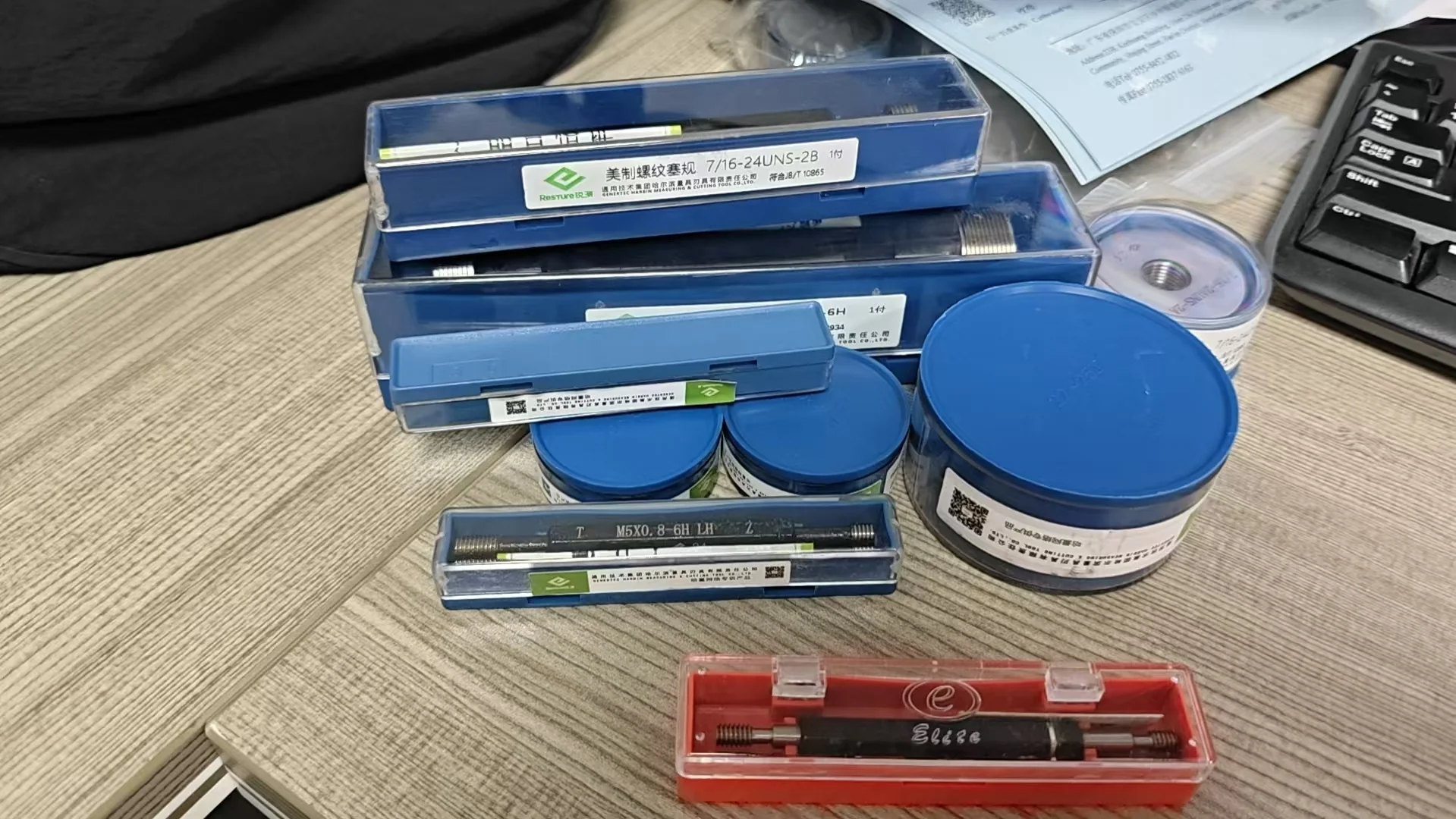
2. Do Not Order from the Finished Screw Size Alone
A request such as “M6 plug gauge” does not establish whether you need an ordinary internal thread gauge or a gauge for a prepared insert holding thread.
Include the insert manufacturer’s part number or technical specification where available. Explain that the gauge is intended for inspection before insert installation, and provide the controlled drawing.
Illustrative example: a buyer needs to inspect holes prepared for an M6 insert but requests only an M6 thread plug gauge. The supplier could interpret this as an ordinary finished-thread requirement. Adding the insert system, STI requirement and governing specification resolves the ambiguity.
3. Confirm the Standard and Gauge Tolerance Basis
Vermont Gage documents differences among specification routes for inch-series STI gauges, including gauge tolerances. Its practical recommendation is to identify the applicable standard when ordering and arranging calibration. See its technical guide to STI gauges.
Do not select a standard or tolerance option simply because it appears in a supplier’s catalogue. Ask the responsible technical reviewer to confirm the requirement for your application and use that same basis in the quotation and documentation request.
4. Prepare These Details for the Manufacturer
| Information | What to Provide | Why It Matters |
|---|---|---|
| Insert system | Manufacturer, series and part number where available | Identifies the holding-thread requirement |
| Thread designation | Size, pitch or TPI, specified class and direction | Prevents incomplete product identification |
| Inspection stage | Before installation or another explicitly defined stage | Distinguishes holding-thread inspection from assembly checks |
| Governing requirements | Approved drawing revision, standard and required edition | Defines the technical basis for the gauge |
| Gauge scope | Required members and any additional inspection tools | Makes the supplied configuration clear |
| Access geometry | Blind-hole depth, recesses and clearance constraints | Supports review of reach and usability |
| Documentation | Required inspection or calibration report | Allows the document scope to be agreed before manufacture |
| Commercial details | Quantity, destination and required date | Supports an order-specific quotation |
5. Keep Thread Acceptance and Installation Checks Separate
Passing a holding-thread inspection does not, by itself, verify every aspect of the installed insert. Installation position and any other assembly requirements need the checks specified by the approved process.
Similarly, the ability to install an insert should not replace the required holding-thread inspection. Define the checks at each manufacturing stage and identify the tool used for each one.
6. Include Depth and Access Requirements
If the holding thread is recessed or in a blind hole, provide a section drawing. State any required thread depth and the reference surface used to define it.
A longer handle alone does not establish a depth-inspection method. Request technical review where special reach or depth indication is needed, and confirm whether those features are covered by the supplied verification records.
7. Review Identification and Documents on Receipt
Match the delivered gauge to the approved specification. Check the STI identification, thread designation, required members and agreed gauge ID. Verify that the supplied records refer to the same item and technical requirements.
Store the gauge so it can be distinguished from ordinary thread gauges for the same nominal screw size. Labels should support identification, but operators should also check the tool itself.
Buyer Questions
Can an ordinary thread plug gauge replace an STI gauge?
No. An ordinary gauge for the finished screw size does not establish conformity of the prepared STI holding thread. Use the specified gauge for that inspection stage.
Does STI mean the gauge fits every insert design?
No. Confirm the insert system and applicable specification. This guide concerns helical coil insert holding threads, not every type of threaded insert.
Can I order using the insert part number?
It is useful identification, but provide its technical specification or drawing and confirm the inspection requirements. A part number alone may not define the complete gauge order.
Are GO and NO-GO gauges the entire inspection requirement?
Not necessarily. Follow the applicable inspection plan, including any additional dimensional checks it requires. Confirm the complete tool scope before purchasing.
Request an STI Gauge Specification Review
Contact GageTools in Dongguan, Guangdong, China, with your insert details and drawing. Ask for confirmation of feasibility, the proposed gauge specification and documentation before placing the order.
For general RFQ preparation, see our custom thread gauge ordering checklist.
Email: [email protected]
More Specification Points to Confirm
- Distinguish Between STI UNC/UNF and Metric STI Callouts: Always state “STI” explicitly in your purchase order and engineering RFQs.
- Account for Plating Allowances and Surface Coatings: If aluminum housings undergo anodizing, chromate conversion, or chemical plating after tapping, standard STI thread plug gauges will result in tight threads after surface treatment.
- Specify Bottoming STI Gauges for Shallow Blind Holes: Helical inserts are frequently used in shallow blind holes on engine blocks and electronic enclosures.
- Verify Missing Prints or Legacy Wire Insert Specs: When re-ordering worn STI shop-floor gauges without access to original technical drawings, follow our engineering protocol on replacing thread gauges without a drawing .
- Common STI Gauging Errors to Avoid: Attempting to inspect STI holes with standard 2B or 6H plug gauges, forcing STI GO gauges into holes contaminated with drilling chips, and forgetting to verify STI tolerance classes (2B STI vs 3B STI) are the leading causes of assembly line downtime.
Related Buyer Guides
- What Is a Thread Plug Gauge? Sizes, Standards and How to Order
- Thread Gauge Tolerance Classes Explained: 4H, 6H, 7H, 6g, 6e and When to Use Each
- Thread Gauges for Blind Holes: How to Specify Depth and Clearance
✓ 20+ years gauge manufacturing
✓ ISO 9001:2015 certified
✓ In-house CNC grinding & inspection
✓ Drawing / RFQ reply within 24h
Have a drawing or thread callout ready? Request a thread gauge quote and our engineering team will review your specification.
Pingback: How to Order Custom Thread Gauges: 12 Details to Include in Your RFQ - GageTools
Pingback: Thread Gauges for Blind Holes: How to Specify Depth and Clearance